
Problem-solving
Sectieoverzicht
-

What is it?
Problem-solving thinking and acting is the ability to acknowledge a problem and come up with a plan to. solve it.
How does it show?
Being able to manage a class discussion after a conflict.
Sitting in a circle, talking about problem-solving.
What can we do to stimulate?
Practise using different learning strategies e.g. creating a mind map, query yourself, remake exercises, highlight keywords…
Reflection questions (PLAN, DO, CHECK, ACT).
After a test, estimate the results.
EF games e.g. Monopoly, Jenga, chess, checkers, battleship…
Smart games
Literature: questions for book discussion.
Specific books e.g. Curious George.
Miracle question: “What would you do if you…?”
Flip it
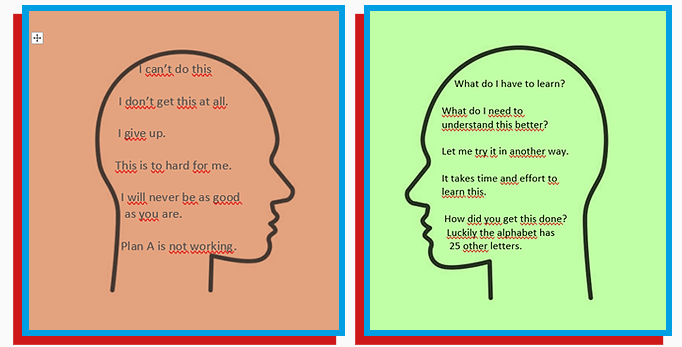
A flip is a tool that helps people thinking move from a negative position to one where they can act upon something. It is a shift from a ”fixed” to a “growth” mindset.
Instead of..., try...:
I can’t do this -> What do I have to learn?
I’m the best at this -> I’m getting better at this.
I don’t get this at all -> What do I need to understand this better?
I give up -> Let me try it in another way.
This is too hard for me -> It takes time and effort to learn this.
I made too many mistakes -> By making mistakes, I can learn.
I can’t do better than this -> I’ll keep trying.
I will never be as good as you are -> How did you get this done?
This is good enough -> can I do better?
Plan A is not working -> Luckily the alphabet has 25 other letters.
What can we do to stimulate?Discuss books with your child. What happened in the story? What solution was there? How would you have solved this?
Playing board games at home.
Hang 'growth-mindset-reminders' in a visible place and actively use them.
Growth mindset: the belief that your abilities are not set in stone; an openness to improving and growing.
Instead of..., try... :
I can’t do this -> What do I have to learn?
I’m the best at this -> I’m getting better at this.
I don’t get this at all -> What do I need to understand this better?
I give up -> Let me try it in another way.
This is too hard for me -> It takes time and effort to learn this.
I made too many mistakes -> By making mistakes, I can learn.
I can’t do better than this -> I’ll keep trying.
I will never be as good as you are -> How did you get this done?
This is good enough -> can I do better?
Plan A is not working -> Luckily the alphabet has 25 other letters.
Example: If there is a conflict at home with a brother or sister, find out together what solutions are.
STOP-THINK-DO-CHECK
